The Acceptance of Death
You. Will. Die.
Everybody you know will die.
Everything that exists in the entire universe, including the universe itself, will die.
Not today (hopefully), but one day.
All will die.
But that’s okay, don’t ever talk about it or think about it.
Just repress it all into some tiny little compartment of your mind until it’s time for you to experience debilitating waves of needless suffering after someone you love gets hit by the cancer train and forces you into a temporary confrontation with the fragility of human existence right before you inevitably revert back to your previous state of comforting delusion that keeps you firmly grounded as the main character with infinite plot armor in a story that can’t possibly end as long as you continue refusing to accept the inescapable reality you’ll die one day too.
Or, maybe there’s a better way?

Many paths can be taken to find meaning in life, but there’s one five-letter answer that is perhaps the most validated. It’s a word that speaks to the finite nature of all things, the revelation that nothing is static.
Everything changes. Everything ends.
As flesh-bound human beings, the bodies and minds we are will eventually cease to be.
We will all experience what we call death.
It is this death that can give life meaning, to know our days are numbered. Part of the journey is the end.
Much is uncertain about this world, but two things do seem rather clear:
1. Nobody asked to be born.
2. Everybody will die.
Some see this in a negative light, the pessimists who revel in the notion that “existence is suffering” in the most literal way possible. But unless those people are actively (and tragically) suicidal, even they don’t really believe our circumstance is purely negative or even more negative than positive. Every morning they wake up and choose to not end their life is proof they prefer being alive.
The very freedom to compose an opinion on the matter demonstrates a preference for existing — with the only other alternative being to not exist.
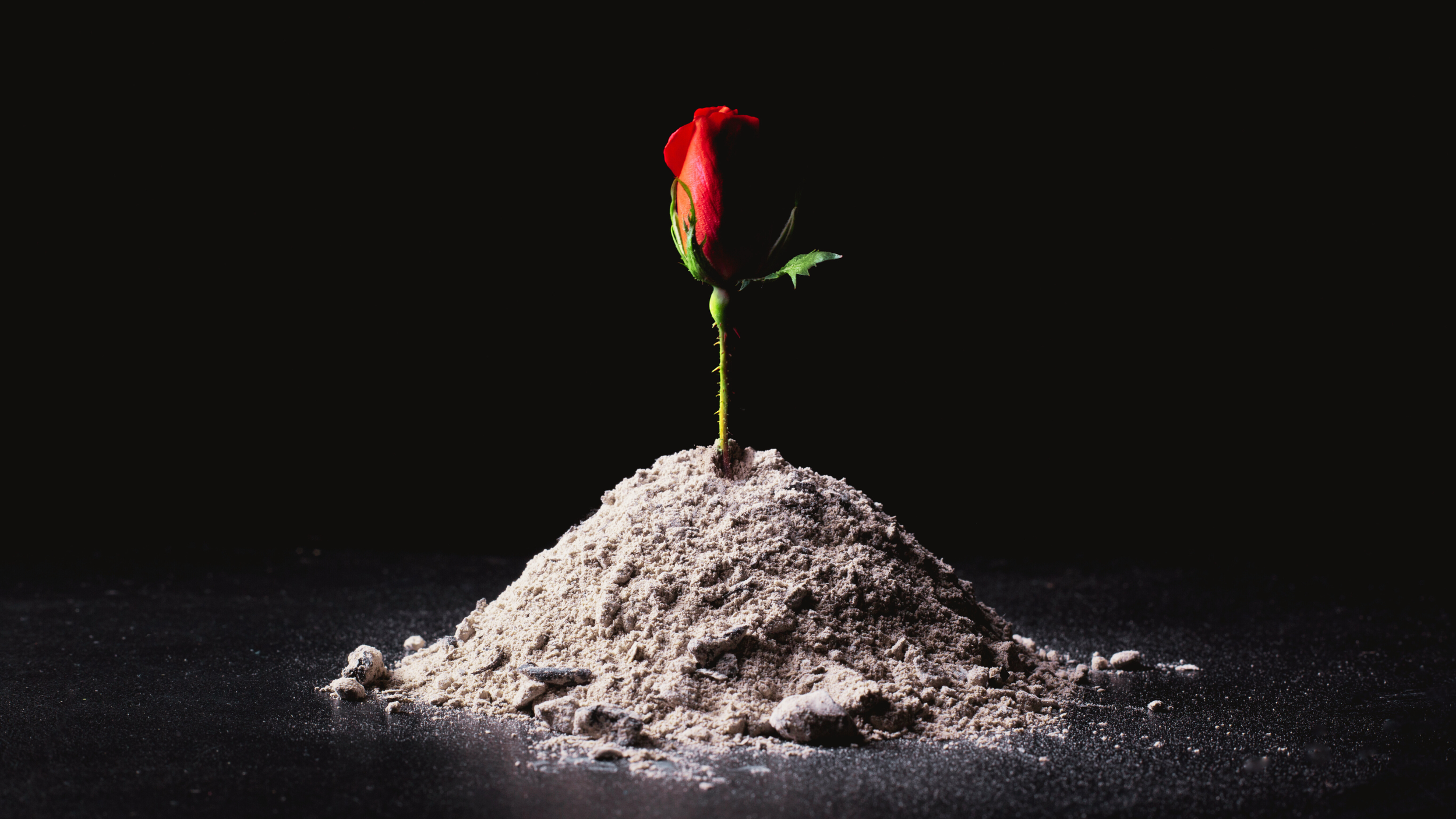
The fact that everybody will die is a fact that makes life extremely precious. It’s fleeting and special and begs to be savored.
Even if we take the most adamant viewpoint that life is a random purposeless blip in some infinitely dimensional simulated multiverse — it’s still a gift.
It’s an opportunity to experience.
An opportunity to be.
Seneca (a stoic philosopher of Ancient Rome) argued that life itself is not actually short, but that many people make it short by not fully appreciating the preciousness of time. He said that people spend their days preoccupied with futures that don’t exist and give away their lives to things that don’t matter. He said:
We lose the day in waiting for the night, and the night in fearing the dawn.
Whether Seneca’s perspective on the non-brevity of life is accurate or not, it remains undeniably helpful to recognize how much time we have in this world.
Most of us get less than 4,000 weeks.
That’s it.
The average human life is roughly 3,800 Tuesdays.
And considering we spend over 1,300 of those weeks sleeping (roughly 26 years) and probably even more time than that worrying about unnecessary things, the time we spend truly living can seem pretty short.
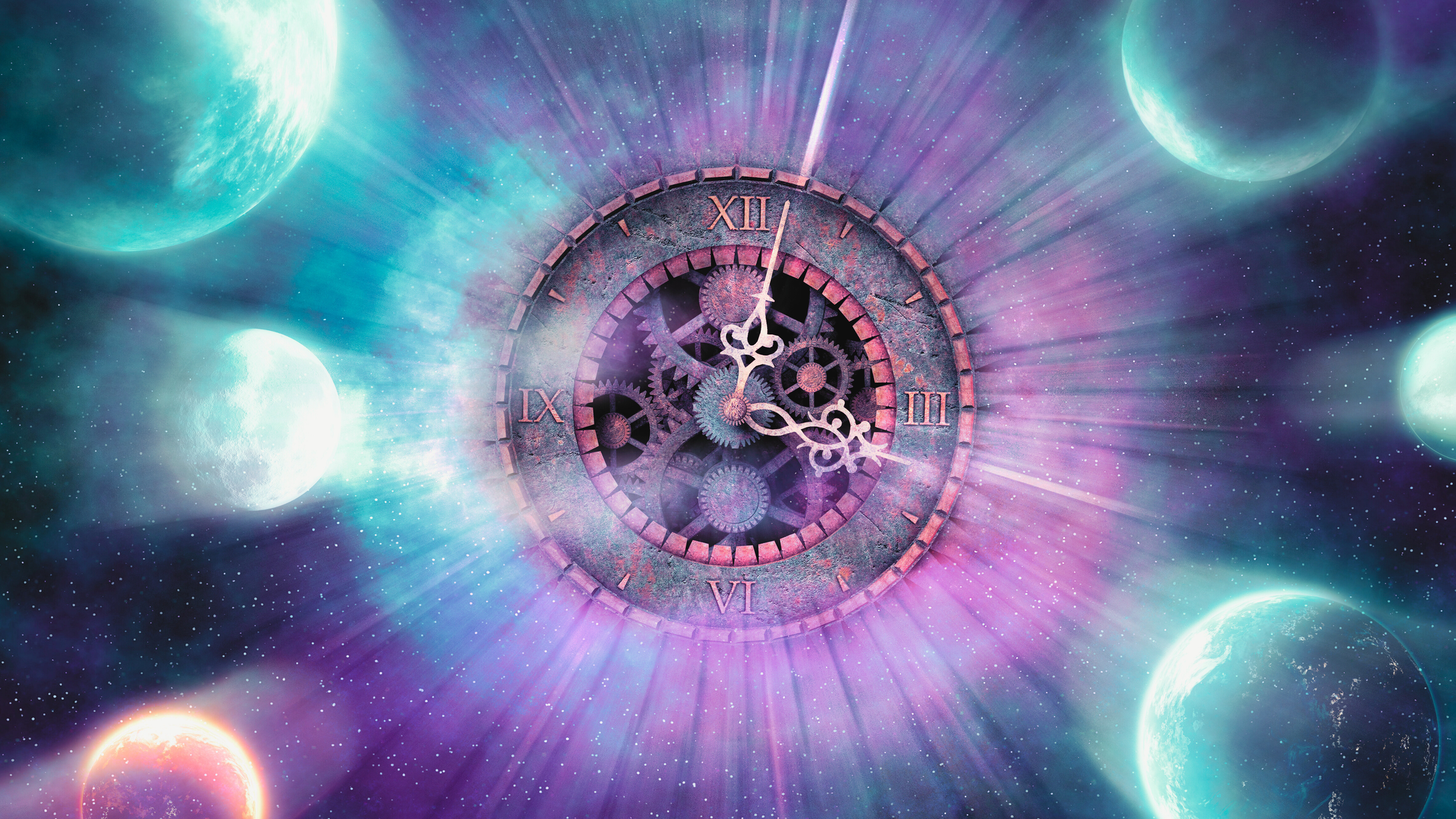
We can also step back for a moment and think about more than just us modern Homo sapiens. Juxtaposed with the history of all life on Earth, our individual lives are incomprehensibly brief.
If we condensed the entire 4.5 billion year history of Earth into a single calendar year, plants wouldn’t even appear until November.
December 13 - hello dinosaurs.
December 31 - goodbye dinosaurs.
December 31 @ 5PM - the first clumsy hominids stand up somewhere in Africa.
December 31 @ 11PM - Homo erectus shows up to the party.
December 31 @ 11:30PM - cavemen draw stuff on walls.
December 31 @ 11:45PM - Homo sapiens make sharp knives and spears.
December 31 @ 11:55PM - civilization begins and Egyptians build some tall pointy things.
December 31 @ 11:58PM - a guy named Jesus tells people to be nice and gets killed a fraction of a nanosecond later.
With only 20 seconds left in the year, Columbus bumps into America.
And in the final moment, at long last we finally arrive at the crown jewel of billions of years of evolution: the YouTube comment section.
It’s incredibly fascinating and humbling to think about our place in the grander scheme — and the further we zoom out, the more fascinating and humbling it gets.
In calculating the lifespan of the universe as measured from the Big Bang to the projected evaporation of the last black hole, scientists have deduced that life as we know it is only possible for:
0.000000000000000000000000000000000000000000000000000000000000000000000000000000000001% of the celestial timeline.
All life as we know it, on Earth or any planet in the entire universe past, present, or distant future, is projected to be possible only during that tiny window, a flash in the pan of the almighty cosmos.
Think about how fragile and rare that makes us. It’s mind-boggling.
This entire universe might be nothing but some magnificent field of energy dancing for itself, each sway generating the winds of space and time and all things beyond — and we’re just the specks of dust lucky enough to be floating in the breeze, a cosmic hiccup on our way from one glorious oblivion to the next, a miraculously beautiful glitch somehow defying seemingly insurmountable odds to claim our brief spotlight before correction.

But poetic sentiments about the universe don’t exactly do all that much in the face of a terminal diagnosis or plane crash.
Reflecting on all of this might be conducive to appreciating the beauty of life, but how does it help with accepting death? Life might be great, but death is the end of that greatness.
How are we to accept its end?
Death’s a strange thing. It makes people squirm. Many avoid ever putting any semblance of thought into it, especially when it concerns their own mortality. But recognition of death, of one’s own inevitable impending doom — well, what other sensible option is there?
Mortality has always been man’s greatest adversary. Though never able to win completely, we fight tooth and nail to escape its grip for some time — as every good steward of life should.
In the words of Welsh poet Dylan Thomas:
Do not go gentle into that good night. Rage, rage against the dying of the light.
Yet this noble fight to live should also be coupled with a resolute acceptance of death, an acceptance that turns mortality from bitter adversary to dearest friend.
Nothing lasts forever.
With this in mind, we can either get on living as much as we’re able or futilely push back against the inevitable. Outside of the mad scientists working to crack the code of cellular aging or being able to copy our minds into machines, there’s simply no escaping it.

So why fight it?
It’s like the child who kicks and screams and makes themselves miserable when their playdate expires. They don’t have to act that way. But they do because children are understandably ignorant and shortsighted, not unlike many adults who kick and scream and pout their way through death.
Instead of focusing on the playdate coming to an end, we can instead be grateful it even occurred in the first place. Instead of generating a bout of self-induced misery for what we’ve lost, we can cultivate an appreciation for what we’ve had.
Ultimately, we’re all just passing through.
The paradoxical thing about death is that, despite being all around us, it remains a void of pure unknown. Nobody knows what will happen after they die.
Every quote you’ve ever heard about death came from someone who’d yet to ever be dead themselves.
Religious and mystical claims come rushing into the void with a story that lost loved ones are in a better place and will meet up with us after we die in a magical land where we’ll get everything we ever want, denying the existence of the unknown and acting as if death is an illusion. Consoling as this narrative may be, it’s easy to see how contrived and foolish it is — especially as it pertains to the devaluing of life on Earth.
Other ideas propose we’ll return to this same world again in different form or as a different person without even knowing it.
Many believe that once the physical brain dies, that’s it. Dial tone. Cut to black. Pure nothingness.
The more imaginative folks wonder if we might wake up in some alien arcade having finished our latest round of Humans.

We have many ideas about what death truly entails, some more fun than others.
But no one really knows.
The beautiful thing about this not knowing is that our ability to live sanely and ethically and happily is unhindered by our absence of knowledge regarding any potential post-death existence or nonexistence.
It can be enticing to make up answers to questions without any. Peering into the great unknown and probing around can also be an important and entertaining exercise, but dealing with the things we do know seems most important.
We know hard problems like consciousness continue to elude capture.
We know life exists on a spectrum.
We know identity is multifaceted.
We know self-image is not some fixed singular entity.
We know millions of our cells die and millions more are born every second.
Our bodies are constantly changing, so the person we knew at 5 years old isn’t really the same person we know at 55.

So what even is death then?
When a person “dies”, is their one minute-old dead body still them? Is it still them 10 minutes later? Or 10 days later? What about when their body is half-rotted underground? What about when they’ve entirely decomposed and become dust?
In the same way we have no absolute definition of life, we have no absolute definition of death.
Death is but a word referring to the loss of biological function as we know it. It’s a word that symbolizes the end of existence in which we are most familiar with.
It reveals the ultimate mystery in the most simplistic fashion: what lies beyond?
We don’t know, and with this great unknown comes fear. But we don’t have to fear it.
As the great Mark Twain once said:
I was dead for billions of years before and never suffered the smallest inconvenience.
Of course, coming to terms with this reality seems far more difficult when the death is not our own. When it’s someone we care about — a mother, a father, a sibling, a spouse, a friend — it hurts. A lot.
But to overcome that hurt, we must first recognize the grief we feel as a purely self-centered thing. It’s a manifestation of our own reluctancy to move on.
It’s absolutely understandable, expected, and can be incredibly challenging, but it’s self-centered nonetheless (as is the case with pretty much everything we do).
When people we care about die, the sadness we feel is often little other than a result of realizing what we have lost. How could it be anything else?

If you truly believe in a utopian afterlife, you should be happy for your loved one having passed on to it.
If you truly believe in reincarnation, they’ll be fine as long as they weren’t a terrible person.
If you think there’s nothing after death, there’s certainly no reason to be concerned for someone who’s now part of that nothingness.
If you think someone died too young or have concerns for other people left behind in the wake of someone’s death, then being sad for reasons beyond self-centeredness does make a little more sense. But that doesn’t seem to be how most people handle it.
It seems that most people’s grief is simply born of the greatest struggle we know:
Letting go.
We struggle to let go of the dead, just as we struggle to let go of relationships. Arguments. Habits. Beliefs. Hatred. Insecurity. Ego. Desire. Fear.
So many things.
We become attached to people. Places. Possessions. Thoughts. Emotions. Status. Money. Drugs. Ideologies. Opinions. Memories. Being alive.
We don’t want to let go because truly doing so requires surrendering control. It requires surrendering everything we call “the self” unto the simple fact that there are so many things we cannot change, despite what we may want and despite what we desperately try to convince ourselves.
Whether or not free will exists, whether or not there’s a bearded man in the sky, whether or not consciousness bears any weight greater than basic neural circuitry, whether or not reality itself is what we perceive it to be — learning to let go is perhaps the most essential skill to creating the best quality of life.
Loss is inescapable.
The sooner we accept it, the better off we’ll be.

It’s definitely true that great loss can spur great gratitude, but it’s not the only way.
We can consciously work to increase our baseline levels of gratitude by savoring moments before they’ve left.
We can lay flowers while people are still alive.
We can pay closer attention to the details and cherish the simpler things on a regular basis.
We can imagine a reality without.
In doing so, we not only become better prepared for the end, but we enhance the lives we live, while we still have them, for ourselves and all those around us.
When it comes to dealing with the loss of someone we hold dear, there’s really only one question worth asking:
Why mourn their death when we can celebrate their life?
It makes a lot more sense to be grateful for the time we did have with someone rather than bemoan the time we didn’t have.
The tears, the anger, the confusion, the emptiness, the regret — sometimes they’re part of the process. And that’s okay. But we have to remind ourselves:
This too shall pass.
Death doesn’t have to be this terrible thing it’s made out to be.
In 1982, author and public speaker Leo Buscalgia published The Fall of Freddie the Leaf — a children’s book on the surface, but nevertheless a tale that will resonate deep into the foundations of any adult who’s ever reflected on the delicate balance between life and death and how we cope with it.
The story follows a leaf named Freddie who begins as a small sprout on a large branch near the top of a tree. Freddie grows large and green, surrounded by hundreds of other leaves similar to himself. As time passes, he makes many friends with his tree-bound cohorts.
The leaves all learn to dance in the breezes, bask lazily in the sun, and wash off in the cooling rains. They learn about the tree they’re part of, its roots hidden in the ground below, and the public park it’s situated in.
They learn about the birds who come to sit on the branches and sing morning songs, and the many people flowing in and out of the park — some were picnickers who ate on checkered tablecloths, some were children who laughed and played, some were old people who spoke in whispers and sought out the leaves’ cool shade.
But the Spring and the Summer soon passed, happening suddenly one cold October’s night. The park’s many trees then begin rapidly transforming into a blaze of color, amplifying the noticeable differences between each of the leaves.
Daniel, the largest and wisest leaf on the limb, explains to Freddie that each leaf faced the sun differently and had different experiences. Naturally, their colors are different.

Not too long after, the same breeze that once made the leaves dance begins to push and pull at their stems, tearing some from their branches.
Fear and confusion strike them all, as Daniel explains the season of Fall — a time for leaves to change their home.
Some leaves aggressively lash back at the wind before they drop to the ground below, while others quietly break away.
Freddie denies it all at first, before eventually asking Daniel when it will be his time to fall, to which Daniel explains that no one knows for sure. Freddie then reveals his fear in not knowing what lies down below, to which Daniel consoles him:
We all fear what we don’t know. It’s natural. Yet you were not afraid when Spring became Summer, or when Summer became Fall. Why should you be afraid of the season of death?
Daniel departs with a humble goodbye for now, falling peacefully from his branch and leaving Freddie all alone.
The first snow falls soon after, weighing heavy on Freddie’s branch as he becomes brittle and loses color.
And then, in an instant, Freddie is finally taken from his branch by morning’s wind.
As he falls, Freddie feels no pain and enjoys floating gently to the ground below as he sees the whole tree for the very first time.
Landing on a clump of snow more comfortable than he’d ever been, Freddie closes his eyes and falls asleep.
He didn’t know that Spring would follow Winter and the snow would melt into water.
He didn’t know that what appeared to be his useless dried self would join with the water and serve to make the tree stronger, or that, asleep in the tree and the ground below, were already plans for new leaves in the Spring.

The story concludes not with “The End”, but instead, “The Beginning” — a touching illustration to suggest that death is perhaps just another step in the transition of being.
Whether it’s a blinding light or an eerie darkness at the end of the tunnel, we must all one day walk through it.
Why not dance our way there?
If you distill our existence down to its finest form, you’ll realize we’re all just bundles of atoms bound by entropy, and time is the only thing that separates us from everything else in the universe.
So what are you waiting for?
Go live.
- Sincerely, He Who Thinks